What causes scale build-up inside old cast iron drain pipes?
Scale in cast iron is rust and mineral deposit growing on the inside wall of the pipe. Cast iron corrodes from the inside over decades. The rust forms rough lumps, called tubercles, and minerals carried in the water settle on them. Grease, soap residue and paper then catch on that rough surface and the bore gets smaller.
The homeowner sees it as drains that slow down over time, often more than one fixture at once, and gurgling when a tub or washer empties. The pipe can look fine from outside while the opening inside has shrunk to a fraction of its size.
A cable machine will punch a hole through the scale, but the water often keeps running through a narrow channel and the build-up returns. Hydro jetting strips the wall back much more completely. Before either one, a camera inspection is worth having on old iron. It shows how much scale there is and whether the pipe wall is thin, cracked or flaking, because a line that is weak can fail once the scale holding it together is cleaned off.
What the job costs depends on access, the pipe material involved, how much has to be opened up or removed, and any permit or code requirement. If sewage is backing up into the house, stop running water and call. Expert Plumbers Co is a referral service. We refer you to a local plumber for Drain Cleaning or Emergency Drain Cleaning in Big Sandy, TN: (380) 262-9173.
A point many people miss is that cleaning scale is not always the end of the story. Once the wall is stripped back, the bare iron can start rusting again, so the line may need cleaning more than once over the years if the pipe is not replaced. Another sign it is getting worse is rusty or dark water standing in a drain that used to run clear, or small flakes of rust in a trap. In homes built before plastic pipe became common, a camera also shows whether the line is worth keeping or is near the end of its life. Pipes that are thin or cracked may need a section replaced, and that can be done in stages rather than all at once. When you call, mention the age of the house and any previous repairs to the drains, since patches in old iron often use different materials.
We run a cafe and the kitchen line keeps blocking. Is that the same job as a house drain?
Not quite. A kitchen line that blocks again and again is usually a grease problem, and that is a different job from a house drain.
A cafe pushes far more fat, oil and food solids down the pipe than a home does. The grease cools, sticks to the pipe wall and builds layer on layer. The opening shrinks each week. That is why the blockage returns on a short cycle.
A grease interceptor, also called a grease trap, sits between the kitchen and the main line. It catches fat before it travels downstream. It only works while it has room. Once it is overfull it stops holding grease and passes it straight into the line. So it needs servicing on a schedule, not just when something goes wrong. Many jurisdictions require an interceptor and expect records of each servicing. That is a code matter, so check with your local authority.
A cable machine punches a channel through the grease and leaves the coating on the wall. Water drains for a while, then the channel closes again. A commercial line usually needs hydro jetting, which uses high-pressure water to strip the wall clean. A camera inspection then checks the pipe underneath for cracks, roots or a sag that holds water.
One slow sink is a branch problem. Every fixture backing up points to the main line.
A blocked line in a food business is a shutdown risk, so timing matters. If water is rising near the prep area, stop using the sinks and call.
What the job involves depends on access to the line, how much has to be opened up, the condition of the pipe and any permit requirement. Expert Plumbers Co is a referral service. Call (380) 262-9173 and we will refer your cafe to an independent local plumber in Big Sandy, TN.
Keep a servicing record and a routine. Write down the date each interceptor is serviced and by whom. Authorities that require interceptors usually ask to see those records.
Train kitchen staff on what goes down the drain. Scrape plates and pans into the trash first, fit fine mesh strainers in every sink, and never pour fryer oil down any drain, even with hot water, because it cools further down the line and sets. Hot water and soap only move grease along the pipe. They do not remove it.
Learn the warning signs of a full interceptor: slow draining at the sinks nearest it, a sour or rancid smell, or grease showing in the outlet chamber.
Set the jetting interval after a camera inspection shows how fast the coating builds, so cleaning happens before a lunch rush is lost to a backup. Mention any recent menu change toward fried or fatty food when you call.
What actually happens when a plumber comes to clear my drain, from the moment he arrives to the last flush?
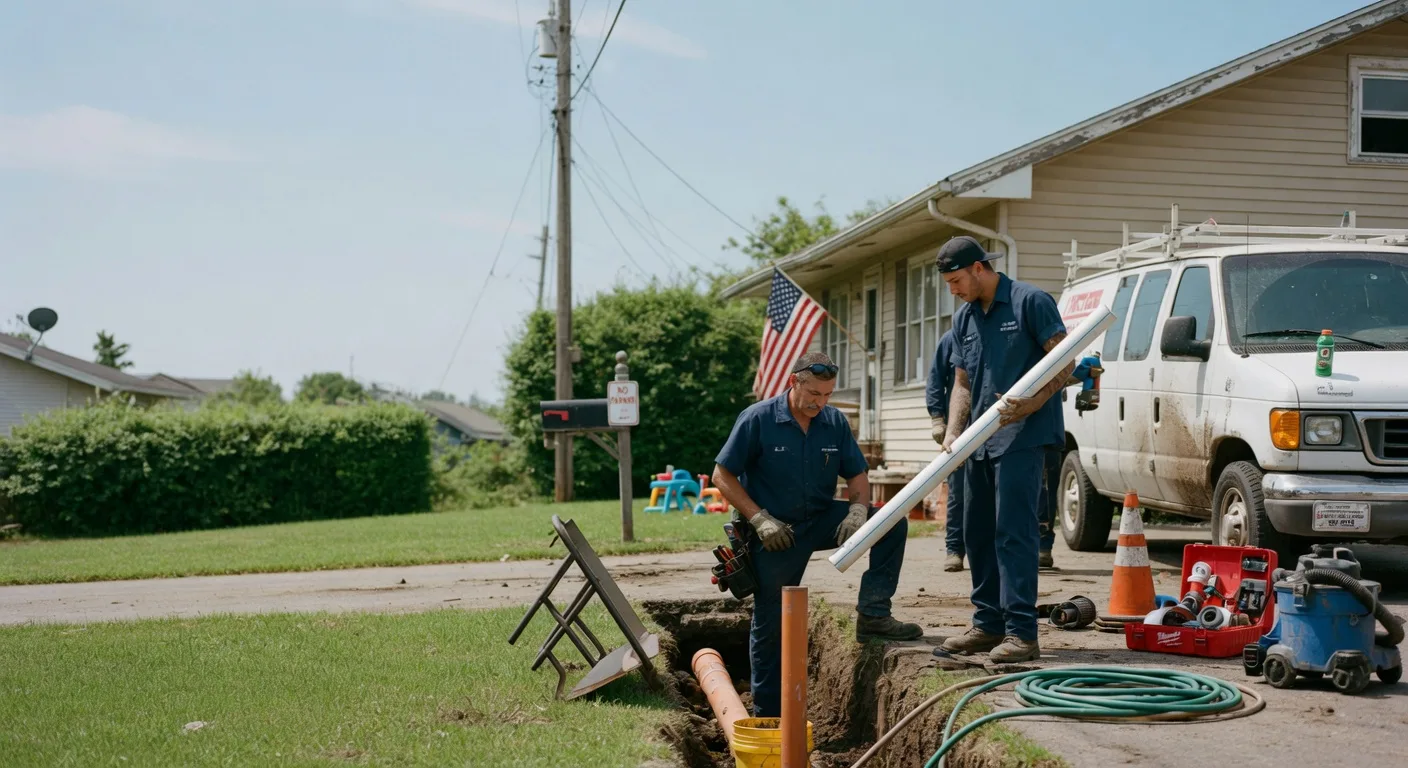
Most people only see the machine come out of the truck. There is more to the visit than that, and knowing the order helps you tell a careful job from a rushed one.
An independent plumber usually starts with questions. Which fixtures are slow, which are fine, when it started, and whether you have noticed gurgling or a smell. One slow sink points to a branch line. Every drain in the house acting up points to the main line.
Next comes a look at access. That might be a sink trap, a tub drain, a toilet that has to be pulled, or a cleanout outside or in the basement. Floors and cabinets get covered with towels or a drop cloth.
Then the plumber picks the tool. A hand auger or small drum machine suits a sink or shower. A larger cable machine suits a main line. If grease or heavy scale is suspected, hydro jetting may come up instead, and a camera may be suggested before anything else.
The cable goes in and is fed forward by feel. A clog gives resistance, then a change when the cutting head breaks through. Roots, grease and soft paper each feel different, and a careful plumber will tell you what the cable seemed to hit. When the cable comes back out, whatever clings to it is worth a look. Hair, wipe fibers, root hairs or a greasy paste all point to a cause.
After that comes the test flush. Water runs through the fixture, and often through several fixtures at once, while the plumber watches for slow movement, gurgling, or water rising in a neighboring drain. At a cleanout, the plumber watches the flow pass. This step matters most. A line that drains well for ten seconds and then slows is only partly open.
Last, the plumber explains what was found. If the blockage was in the main line, has come back before, or the cable stopped at the same spot each time, a camera inspection is the sensible next step, because a cleared pipe and a healthy pipe are not the same thing.
Cost depends on access, how far the cable has to travel, whether a toilet has to be pulled, and whether extra equipment is needed.
If you need a drain cleared in Big Sandy, TN, Expert Plumbers Co can connect you with an independent local plumber at (380) 262-9173.
Can I watch the camera footage from my sewer line, and what should I ask the plumber to show me?
Yes, you can ask, and a plumber who does this work properly will usually be glad to show you. The picture is the clearest evidence there is of what is happening inside a pipe you cannot see.
Most inspection cameras feed a small monitor at the cleanout or a tablet held by the plumber. Ask to watch it live. Ask to see the footage again afterward, and whether it was recorded. A recording matters if you later need a second opinion, a repair quote from another plumber, or a record for a home sale.
Here is what to ask to see.
The start of the run. A clean, round pipe wall tells you the line was open and what material it is, such as clay, cast iron or plastic.
Any joint that looks offset, cracked or separated. Ask the plumber to pause on it.
Root growth. Fine roots look like hair or threads at a joint. Heavy roots fill the pipe like rope.
Standing water. A section that holds water is a bellied line, a low spot where debris collects. Ask how long the section is.
Scale or heavy buildup, especially in cast iron, where the wall looks rough and lumpy.
The end of the run. Where did the camera stop, and why? A collapse, a hard blockage, or a break all look different.
Then ask how far from the cleanout each problem sits. Many cameras carry a footage counter or a locator that finds the spot from above. That distance is what tells you how much digging a repair might involve.
A few cautions are worth knowing. The image can look worse on a small screen than it is, and a single hairline crack is not the same as a collapse. A plumber should be able to say which it is and what it means for the next step. If the camera could not pass a blockage, ask what is beyond it, because the camera has only seen part of the line.
What camera work adds to a visit depends on access and how long the run is, and it often heads off a repair based on a guess.
If you need a drain cleared in Big Sandy, TN, Expert Plumbers Co can connect you with an independent local plumber at (380) 262-9173.
Our older house has a house trap, or running trap, in the basement. Why does it keep clogging?
Your basement drain backs up every so often, and each time someone points at the house trap and clears it again. In an older house that is a familiar story.
A house trap, also called a running trap, is a U-bend on the main drain near the foundation wall, with two cleanout plugs. It holds water to keep sewer air out. The trouble is that the dip slows the flow and gives solids a place to settle. Paper, grease, wipes and roots that pass through a straight pipe pile up in the bottom of the bend, so the trap becomes a frequent stoppage point.
Old lines make it worse. Scale in cast iron roughens the pipe and catches debris before it reaches the trap. Root intrusion at a clay joint outside sends fibres toward it. A bellied line downstream can hold water back so the trap never fully clears. Many traps were removed over the years, and local code on keeping or removing one varies.
One slow fixture is usually its own branch problem. If toilets, tubs, sinks and the washer all slow down together, or the floor drain bubbles, the trap or the main beyond it is the likely spot.
Safe homeowner check: Stop using water and look at the two trap plugs without opening them. Check whether the floor drain is holding water, and note which fixtures back up first.
Stop running water and call now if sewage is coming up from a floor drain or shower, if you smell sewage in the basement, or if a plug is weeping. Never loosen a trap plug under pressure, because sewage can surge out.
A cable machine is often enough to clear the trap itself when the stoppage is soft. Hydro jetting is the better choice when grease or scale lines the pipe on either side. A camera inspection is the right step when the trap keeps clogging, because it shows whether the real fault is a belly, a root-filled joint or a failing section further down.
Expert Plumbers Co is a referral service. We connect you with an independent local plumber in Big Sandy, TN. Call (380) 262-9173.
Ask whether the trap can stay and be cleaned when needed, or be removed where code allows. The scope depends on basement access, the condition of the pipe on both sides, how much floor has to be opened up, and any permit or code requirement for changing the main.